When Corporate Video Production Should Lead with Story, Not Specs
You need a video. You know what it is for. You have a rough idea of the message. So you start looking for a production partner. And immediately, the conversation turns to specs. Resolution. Frame rates. Deliverable formats. Production timelines. All important, but none of it matters if the story is not clear first.

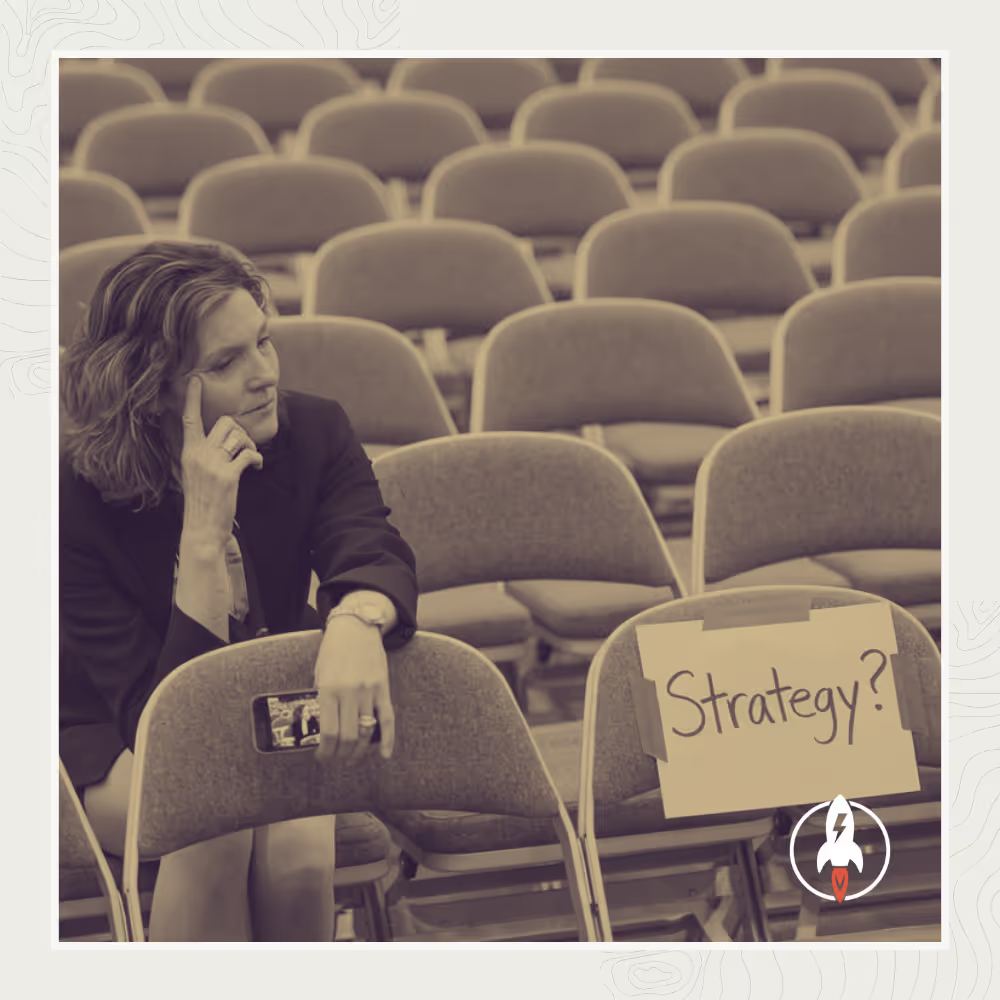
When your internal content lacks alignment, your team notices.
It signals a lack of clarity. If your organization cannot speak with one voice, it suggests the strategy itself might be unclear. Teams may start to wonder if leadership knows where things are headed or if they even believe in it themselves.
It creates friction. Inconsistent content means every team is starting from scratch. No shared templates. No unified messaging. No clear standards. That inefficiency can compound quickly across any organization or team.
It weakens your internal brand. Your employees are your first audience. If the content they see every day feels disjointed or generic, it undermines the culture you are trying to build. In otherwords, your customers are downstream from your employees –– and if your employees are confused on the messaging, they’ll only amplify that dissonance. People disengage when they do not see intention behind the communication, so think about how that ripples to your customers/clients.
The Problem in Leading with Production
Most corporate video projects start backwards. Teams jump into logistics before they have defined what the video actually needs to accomplish. Put more broadly, they prioritize tactics over strategy. The result is content that looks professional but does not connect.
Here is what that looks like in practice:
The brief is vague. "We need a culture video" or "We want to highlight this initiative" does not give a production team enough to work with. Without clarity on the outcome, the content defaults to generic.
The message gets lost in translation. When strategy is not defined upfront, production teams fill in the gaps. That usually means safe choices, predictable structures and content that checks a box but does not move anyone.
The video does not fit into anything larger. A standalone video rarely achieves much. But when teams skip strategy, they miss the opportunity to design content that supports a bigger communication effort.
What Changes When Story Leads
The best corporate video work starts with a different question: What is this video trying to do? Not what it should look like. Not how long it should be. But what outcome it needs to create. Once that is clear, everything else becomes easier.
The narrative structure becomes obvious. You know what the audience needs to hear first, what will make them care and how to frame the message so it lands.
Production decisions align with purpose. The format, tone and style all follow from the strategy. You are not guessing. You are designing for a specific result.
The video works as part of a system. When story leads, you can see how the video connects to other content, where it fits in the rollout and what needs to happen before and after it goes live.
A Better Process
If you are planning a corporate video project, start here:
1. Define the outcome. What should people understand, feel, or do after watching? If you cannot answer that clearly, the video is not ready for production.
2. Identify your real audience. Not just job titles, but what they care about, what they are skeptical of, and what will actually get their attention.
3. Map the larger story. How does this video support your broader communications strategy? What comes before it? What happens after? (See how a real corporate storytelling strategy ensures every piece connects.)
4. Then talk production. Once the strategy is locked, production becomes a tool to execute the story –– not a substitute for having one.
5. This approach takes more thought upfront. But it saves time, budget and frustration later because you are building something that actually works.
When It Matters Most
This is especially critical for high-stakes moments. Leadership transitions. Major initiatives. Culture shifts. Rebrands. When the story truly matters, production alone will not carry it.
You need a partner who can think strategically first and execute flawlessly second.
At Rocket Farm, we do not start with cameras and shot lists. We start by understanding what you are trying to achieve, who needs to hear it, and how to structure the story so it connects. Then we produce content that delivers.
If you are planning a video project and want to make sure the story is right before production begins, let's talk. Book a discovery call, and we can help you get clear on what you actually need.