The Hidden Cost of Misaligned Creative Leadership (And How to Fix It)
Your creative team is talented. The work looks good. But something is not working. Projects take longer than they should. Revisions pile up. Stakeholders push back. The final work often feels like a compromise instead of something everyone believes in. The problem is not the creative execution. It is the alignment.

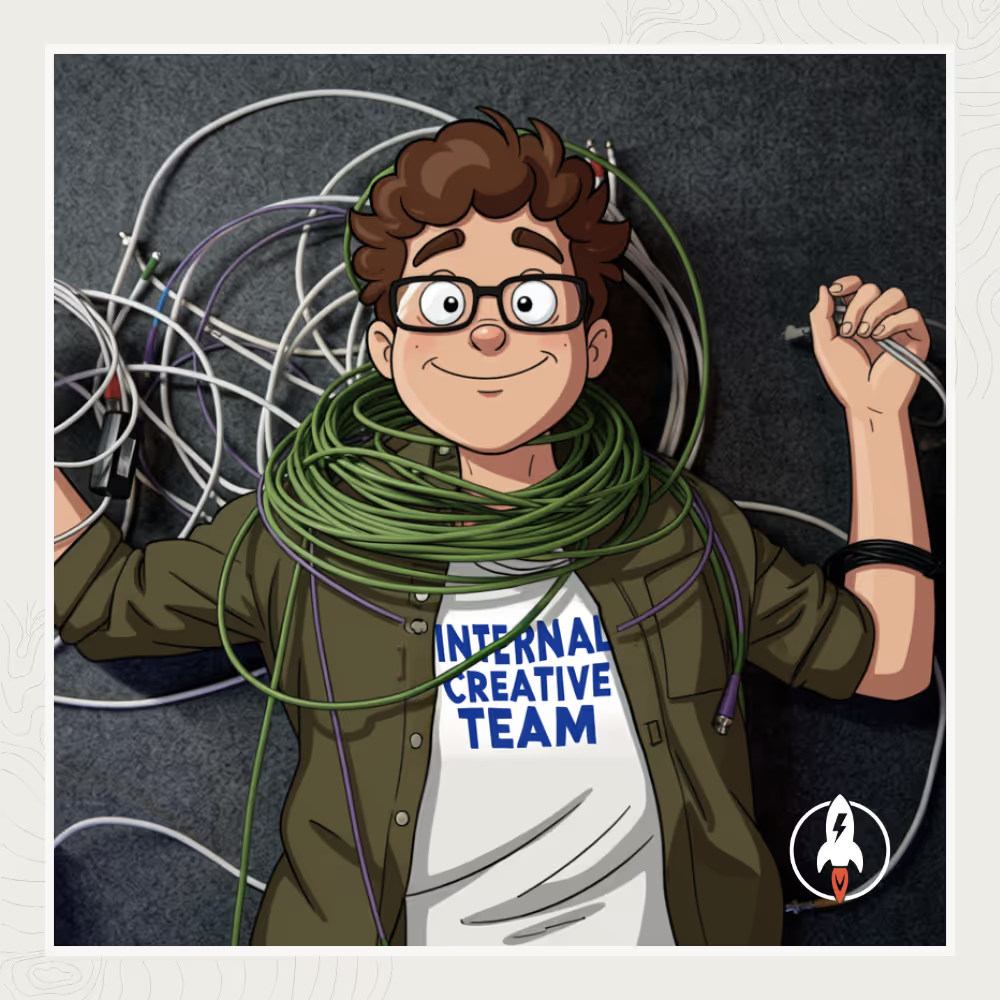
When your internal content lacks alignment, your team notices.
It signals a lack of clarity. If your organization cannot speak with one voice, it suggests the strategy itself might be unclear. Teams may start to wonder if leadership knows where things are headed or if they even believe in it themselves.
It creates friction. Inconsistent content means every team is starting from scratch. No shared templates. No unified messaging. No clear standards. That inefficiency can compound quickly across any organization or team.
It weakens your internal brand. Your employees are your first audience. If the content they see every day feels disjointed or generic, it undermines the culture you are trying to build. In otherwords, your customers are downstream from your employees –– and if your employees are confused on the messaging, they’ll only amplify that dissonance. People disengage when they do not see intention behind the communication, so think about how that ripples to your customers/clients.
When creative leadership is not clearly connected to organizational strategy, inefficiency and frustration become inevitable. The team works hard, but the work does not land the way it should.
What Misalignment Looks Like
Misaligned creative leadership shows up in a few predictable ways:
- Creative is treated as a service function, not a strategic partner. Teams receive requests and execute them without being involved in the larger thinking. The result is work that checks boxes but does not solve the real problem.
- Revisions are endless. Stakeholders keep asking for changes because the original brief was unclear or the creative approach was not aligned with the actual goal. The team ends up redoing work multiple times.
- There is no shared definition of quality. Leadership has one expectation. The creative team has another. Stakeholders have a third. Without alignment on what good looks like, every project becomes a negotiation.
- Strategic priorities are unclear. The team does not know which projects matter most or how their work connects to organizational goals. Everything feels equally urgent, which means nothing is actually prioritized.
When these patterns exist, even great creative talent ends up frustrated and underutilized.
Why This Happens
Misalignment usually comes from one of two places:
- Creative leadership is disconnected from organizational leadership. The creative team reports into a function that does not have visibility into strategic priorities. They are executing work without context.
- There is no process for aligning on outcomes before creative begins. Projects start with a request, not a strategy. By the time creative is involved, the approach has already been decided, and the team is just filling in the details.
- In both cases, creative becomes reactive. The team is responding to requests instead of shaping the work from the start.
That limits their impact and creates inefficiency across the organization.
What Aligned Creative Leadership Looks Like
When creative leadership is aligned with organizational strategy, the dynamic changes.
Creative teams are involved earlier. They are part of the conversation when priorities are set, initiatives are designed, and strategies are developed.
That alignment creates a few important outcomes:
- Briefs are better. When creative leaders understand the larger strategy, they can push back on requests that do not make sense and propose better approaches before production begins.
- Work is more efficient. Because the creative approach is aligned with the goal from the start, revisions decrease. The team spends less time redoing work and more time refining it.
- Quality improves. When everyone agrees on what success looks like, creative teams can focus on craft instead of navigating conflicting expectations.
- Creative becomes a competitive advantage. Instead of just supporting the organization, aligned creative leadership helps shape how the organization shows up. The work drives outcomes, not just deliverables. (Discover how internal brand agencies align creative with organizational identity.)
How to Build Alignment
If your creative team feels misaligned, a few things can help:
- Involve creative leadership in strategic conversations earlier. Do not wait until the plan is set. Bring creative leaders into the process when priorities are being defined and initiatives are being shaped.
- Create a shared language around outcomes. Make sure everyone, from executives to creative teams, is clear on what success looks like for each project. Not just what the deliverable is, but what it needs to achieve.
- Establish decision making frameworks. Who has final approval? What is the process for feedback and revisions? When roles and authority are clear, projects move faster and with less friction.
- Build systems that scale alignment. Templates, creative briefs, and review processes that ensure alignment happens consistently, not just on high stakes projects.
When creative leadership is aligned with organizational strategy, the team becomes more effective, the work improves, and the organization gets better results.
When to Bring in Outside Support
Sometimes the challenge is not that internal creative leadership is weak. It is that they are stretched too thin to focus on alignment while also managing execution.
This is where a strategic creative partner can help.
A partner can take on some of the execution load, freeing internal creative leaders to focus on strategy and alignment. Or they can bring an outside perspective that helps identify where the disconnects are and how to fix them.
Either way, the goal is to give creative leadership the space and support to operate strategically, not just reactively.
Where to Start
If your creative team feels misaligned, ask:
- Is creative leadership involved in strategic conversations early, or are they brought in after decisions are made?
- Do we have a shared understanding of what good creative work looks like, or is it different depending on who you ask?
- Are our creative leaders spending most of their time executing, or do they have bandwidth to think strategically?
Alignment does not happen by accident. It requires intentional structure, clear communication, and often outside support to create the systems that make it sustainable.
At Rocket Farm, we work with organizations to align creative leadership with strategic priorities. We help build systems that make alignment repeatable, and we partner with internal teams to ensure creative work drives real outcomes.
If your creative team is working hard but the work is not landing the way it should, let's talk. Book a discovery call, and we can help you identify where the misalignment is and how to fix it.